Dispatcher Gantt Design System
- Shipped
- June 2022, Summer Internship Project
- Visual Design, Design Systems
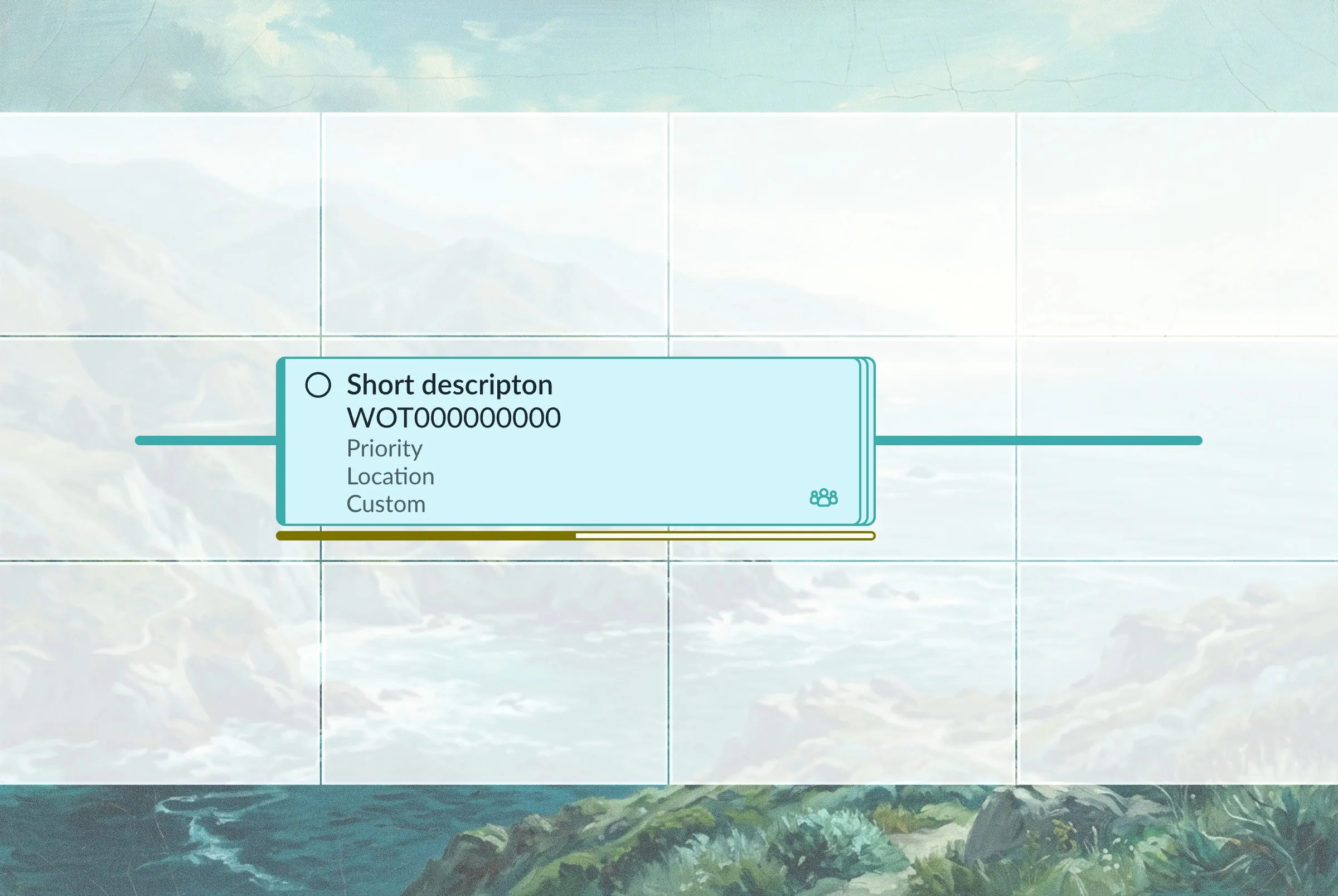
- Redesign of Dispatcher Gantt chart event body component, design system for component foundations
Overview
As the Dispatcher workspace evolved to support new use cases and customer-specific requests, its growing complexity exposed limitations in the existing component system. As an intern, I took on the project of rebuilding these foundations, improving configurability, reducing unnecessary complexity, and creating clearer visual hierarchy and scannability. At the time, the design team was newly formed and lacked an established component library, so I partnered with engineering to build a Figma design system and bring those foundations into the codebase. The project was an early exercise in visual design, system thinking, and building scalable, reusable components.
Problem
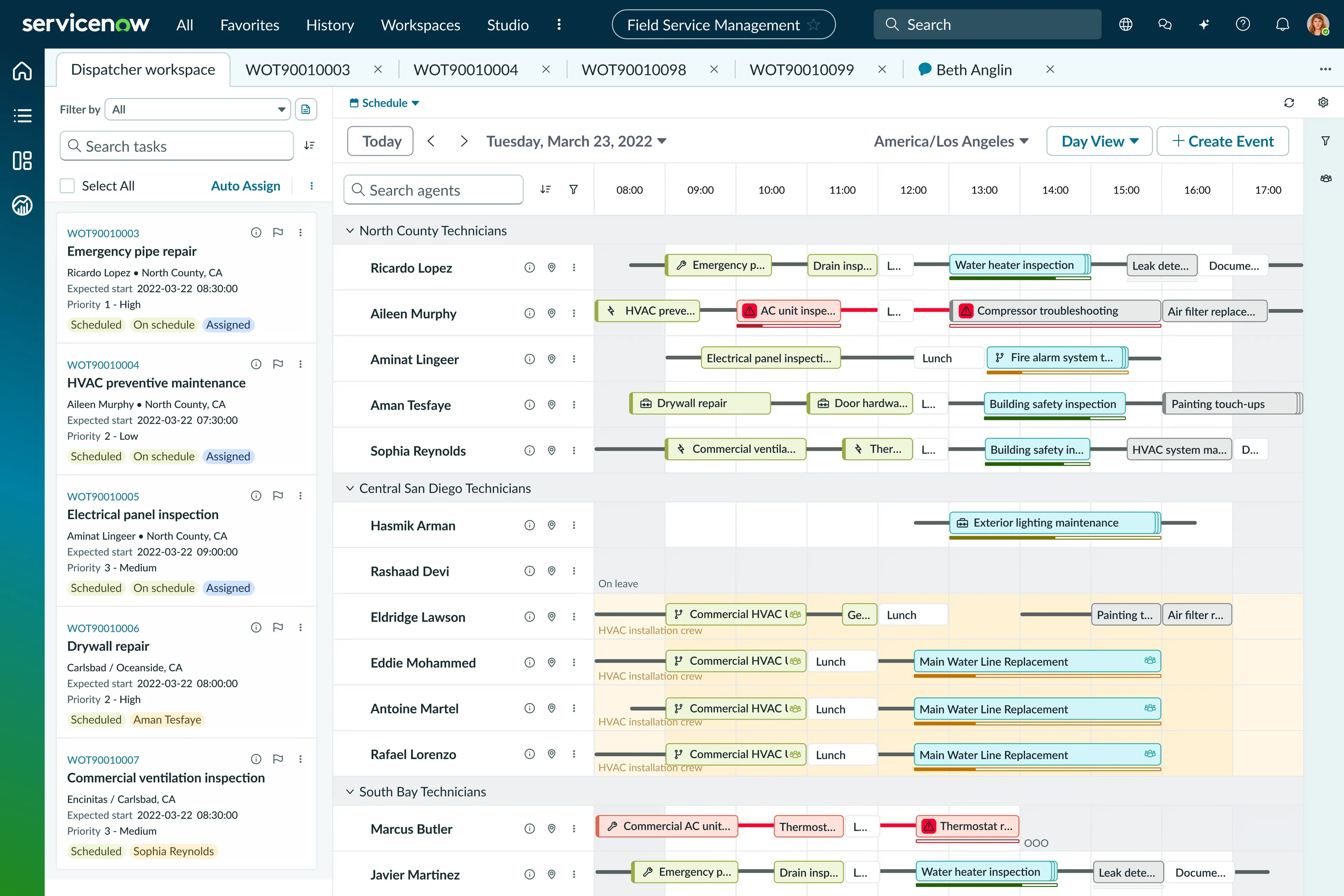
Dispatcher Workspace: A field service management workspace that gives dispatchers and service managers a complete view of assets, teams, and tasks. supports a wide range of enterprise customers across industries—from telecommunications to utilities to healthcare—each with different operational workflows and scheduling needs. As we scaled to new customers with increasingly specialized operational requirements, we received constant requests for additional event metadata within the scheduling board. This included task types, SLA risks, customer priority, technician statuses, among other workflow-specific signals.
Opportunity
These requests revealed a broader systems problem: the existing event body framework was no longer scalable for the growing complexity of enterprise scheduling workflows.
Rather than continuing to layer on one-off customizations, this created an opportunity to establish scalable design and component foundations that could support future scheduling features and enterprise customization over time.
Solution
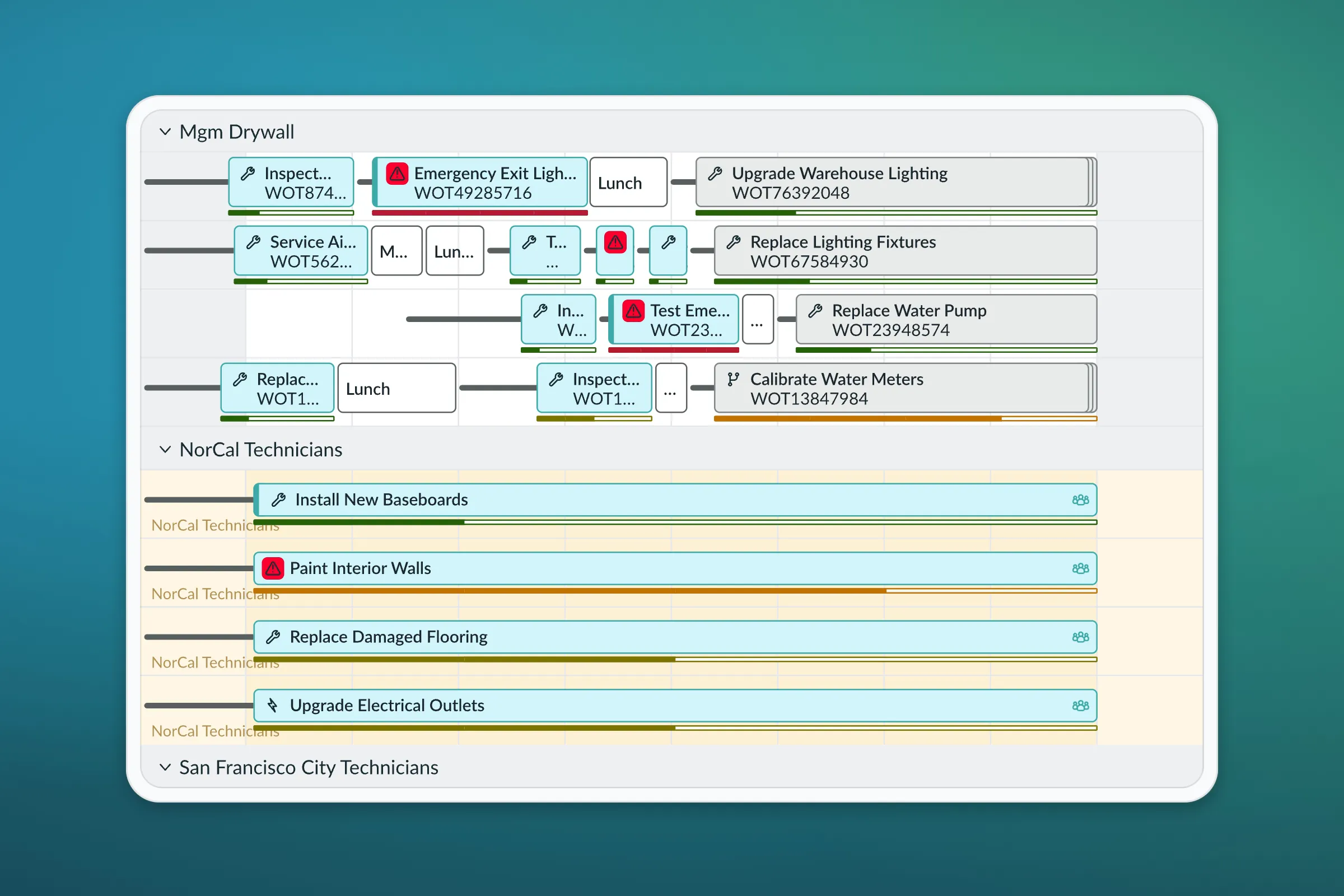
I redesigned the event bodies to incorporate the scheduling details customers were requesting, using the opportunity to introduce a more flexible structure and stronger visual hierarchy that kept complex information easy to scan.
To make the system reusable across teams, I also created component foundations in Figma and partnered with engineering to implement them in the codebase, ensuring future updates could be delivered more consistently.
Narrowing the field set
A database audit revealed 108 fields that could inform task events, not including customer-specific add-ons, configurations, or newly requested fields. This clarified the scale of the problem: the challenge was not a lack of information, but determining which details were actually useful in a dense scheduling view. Through interviews, concept testing, and cross-functional input, we found that the most valuable signals were tied to exceptions—emergencies, SLA risks, breached time limits, or special circumstances. From there, we narrowed the data set to identify which fields were worth surfacing directly in the event body versus which should remain configurable.
Defining visual hierarchy
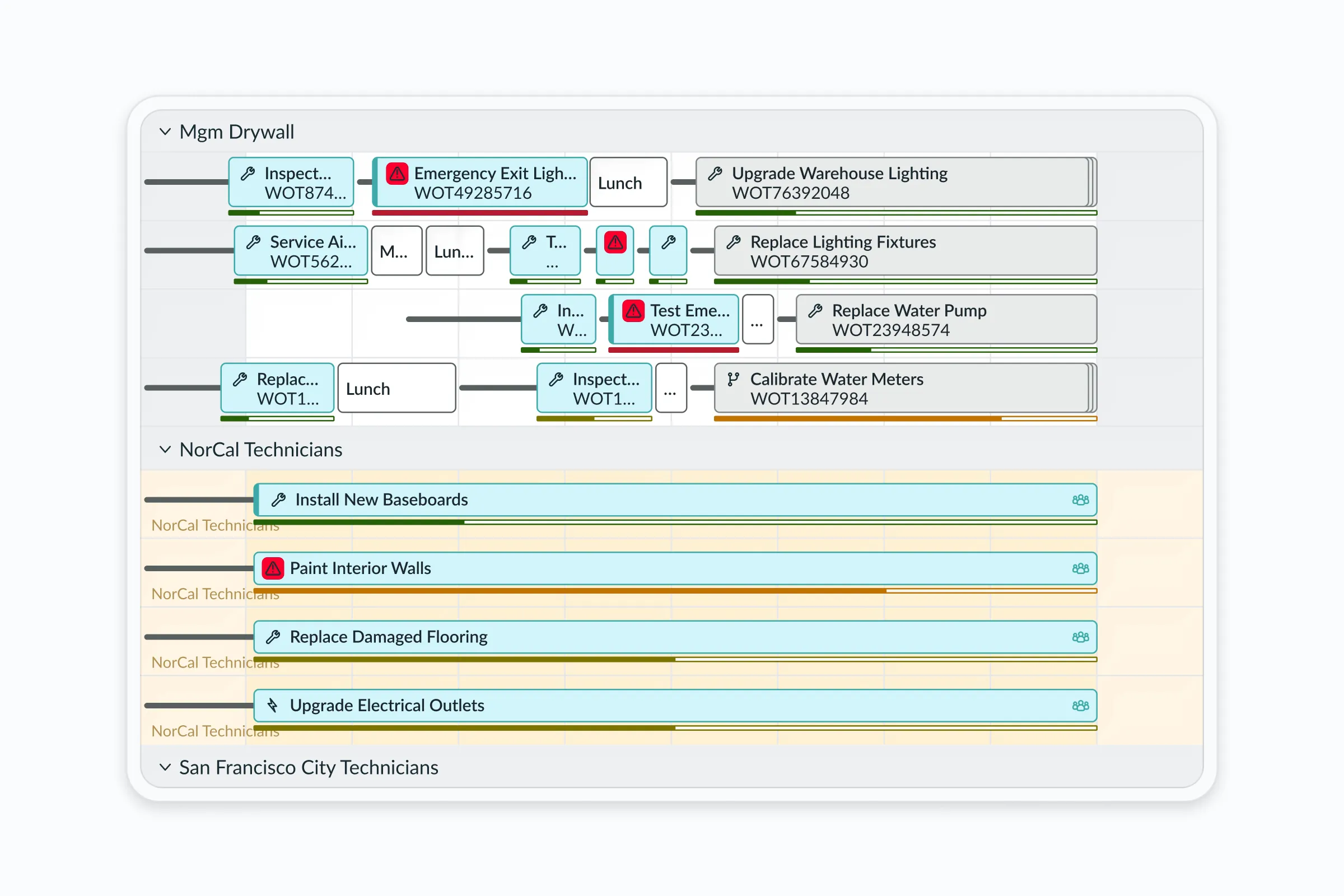
Even after narrowing the field set, we still needed to support up to 14 UI elements within a 45-pixel-tall calendar event. Without a clear hierarchy, the added metadata risked creating visual clutter and cognitive overload. I thus redesigned the event body structure to prioritize urgency and scanability, and stress-tested the component across different calendar views and density states to ensure the system remained legible and usable across configurations.
Building reusable foundations
Once the event bodies were finalized, I built the team’s first reusable design system for them in Figma—creating a component library that standardized every supported event state and variation. I also partnered with engineering to implement matching code components, ensuring the system stayed consistent as new fields and configurations were introduced.
Special thanks
This project was part of my first product design internship, and it gave me the opportunity to work across product, engineering, customer support, and design systems in a complex enterprise environment. I’m especially grateful to my design manager, John, and my mentor, Karin, for their support, guidance, and generosity throughout the process. Their mentorship helped shape not only this project, but many of the foundations I still carry with me as a designer!